

Aronia chokeberry
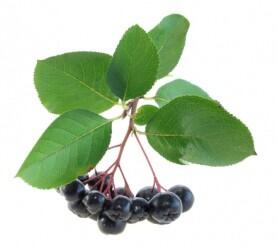
Deciduous shrub. Used for the prevention and treatment of various diseases, in particular the thyroid gland, hypertension, etc.
Aronia fruits are used for medicinal purposes. Back in 1959, chokeberry juice was recommended by the Pharmaceutical Committee for the treatment of hypertension and atherosclerosis. Due to the content of a significant amount of biologically active substances in chokeberry fruits, it is prescribed for various allergic diseases, diseases of the cardiovascular system, hemorrhoids, radiation injuries, weeping eczema, as well as capillary lesions associated with the use of anticoagulants, arsenic compounds, and salicylates. A beneficial property of chokeberry fruit is its high iodine content, which is why it is used for some thyroid diseases. The increased content of vitamins in chokeberry fruits ensures its use in diseases of the circulatory and digestive systems. The effectiveness of taking drugs obtained from chokeberry increases when taken simultaneously with drugs from plants containing ascorbic acid (rose hips, black currant).
It should be borne in mind that taking chokeberry fruits and juice for medicinal purposes is contraindicated in case of increased blood clotting; in case of arterial hypotension, gastritis with high acidity, gastric and duodenal ulcers, as well as hyperacid gastritis, their use is also not recommended.
Aronia chokeberry is a species of the Aronia genus, belonging to the Apple subfamily of the Rosaceae family. The genus includes about 15 species, growing mainly in damp places. In our country, chokeberry has several names: chokeberry, chokeberry Michurin or “chokeberry” due to its black fruits.
Shrub up to 2-5 m high. Old trunks are grayish-black, young branches are cherry-red, annual shoots are dark green. The leaves are petiolate, alternate, elliptical or obovate, pointed up to 8 cm long and 4 cm wide, with crenate teeth along the edge and dark glands along the main vein. In summer the leaves are dark green above and lighter below, and red in autumn. The flowers are bisexual, white or pinkish, collected in 10-15 corymbose inflorescences. The fruits are almost black or dark purple apples, with a bluish bloom, juicy, up to 1.5 cm in diameter. It blooms in May-June, the fruits ripen in late August - September. The yield of chokeberry: 5 - 8 kg per bush. Chokeberry propagates by root suckers and cuttings.
The homeland of chokeberry is the eastern part of North America. It is not found in the wild in our country. Mass development in culture began in the early 50s. In Europe, chokeberry appeared as a fruit plant only after the Second World War. In the Altai Territory during the years of Soviet power, there were chokeberry nurseries. Winter-hardy, more productive varieties of chokeberry (chokeberry) that are resistant to fruit pests and diseases were bred there. From Altai, chokeberry spread to the territory of the Soviet Union, and then to Europe.
Now chokeberry is grown in many regions of Russia with a temperate climate: in the Moscow, Leningrad, Kaluga, Sakhalin regions, and Altai Territory. Chokeberry is mainly grown as an ornamental and fruit plant in gardens, parks and personal plots.
Aronia fruits contain up to 10% sugars, as well as malic and other organic acids - 1.3%; pectin substances - 0.75%; tannins - 0.6%, ascorbic acid (vitamin Q -15 mg/%, citrine (vitamin P) - 2000 mg/%, carotene - 2 mg/%, riboflavin - 0.13 mg/%, folic acid - 0 .1 mg/%, nicotinic acid (vitamin PP) - 0.5 mg/%, vitamin E, tocopherols - 1.5 mg/%, phylloquinone - 0.8 mg/%, pyrodoxine - 0.06 mg/%, niacin - 0.3 mg/%, thiamine - 0.01 mg/%, as well as amygdalin, coumarins, rutin, quercetin, quercitrin, hesperidin, catechins, cyanidin and its glycosides, sorbitol, anthocyanins, flavonoids and other compounds. - and microelements, iron - 1.2 mg per 100 g of pulp, manganese - 0.5 mg, iodine - 5-8 mcg per 100 g, as well as salts of molybdenum, boron, manganese, and copper are especially prominent.
Juice from the fruits of chokeberry stimulates the appetite, increases the acidity and digestive power of gastric juice. It retains vitamins well and increases the body's defenses. Fresh chokeberry fruits and its juice also exhibit medicinal properties, significantly reducing blood pressure in hypertension, while in people with normal blood pressure such an effect is usually not observed.
In our country, chokeberry became famous as a fruit plant at the beginning of the 20th century thanks to the works of I.V. Michurin. Chokeberry became widespread in Russian gardens only in the 1950s, when the healing value of its fruits for the treatment of hypertension was proven. Over time, gardeners have come to love chokeberry as an unpretentious, high-yielding fruit crop.