

Echinacea purpurea herb
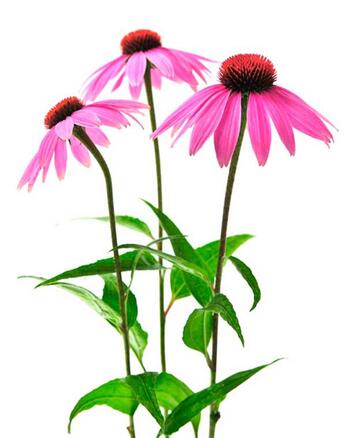
For medicinal purposes, the grass, leaves, rhizomes with roots of Echinacea purpurea are used in the form of tinctures, liquid extracts, which are also included in preparations that enhance immunity and are effective against various infectious and viral diseases. Externally used to treat burns, abscesses, and infected wounds.
Echinacea purpurea belongs to the Asteraceae family. Along with Echinacea purpurea, Echinacea angustifolia and Echinacea pallidum are used.
Echinacea purpurea is a perennial herbaceous plant 50-100 cm high with a short multi-headed rhizome and several erect reddish stems. The lower leaves are collected in a rosette, oblong-ovate, hard, rough. Stem leaves are alternate ovate-lanceolate, pointed, pubescent. The baskets are apical, large, up to 15 cm in diameter, consisting of red-brown central tubular flowers and marginal reed flowers of pink-purple color. The fruit is a grayish-brown achene. It blooms from July to autumn, bears fruit in August-October.
Distributed in prairies and along sandy river banks in the eastern states of the United States. In Russia, it is cultivated in the European part and the Caucasus as a medicinal and gardening plant.
All parts of the plant contain polysaccharides (heteroxylans, arabinoramnogalactans), essential oil in baskets (up to 0.5%), in grass (up to 0.35%), in roots (up to 0.23%), enzymes, macro- (potassium, calcium) and trace elements (selenium, cobalt, silver, molybdenum, zinc, manganese, etc.). The main components of essential oil are non-cyclic sesquiterpenes. The roots also contain inulin (up to 6%), glucose (7%), glycosides (echinoglycoside), echinacoside, phytosterols, organic acids (palmitic, linoleic, cerotinic), phenolcarboxylic acids (chicoric, ferulic, coumaric, caffeic), fatty oils , betaine (0.1%), resins (2%), polyamides, antioxidants (echinocin, echinolone), cis-8 pentadecadiene.
Echinacea preparations increase immunity due to the activation of protective cells of the immune system (phagocytes), and the compound cis-1,8 pentadecadiene has pronounced antitumor activity. All organs of Echinacea purpurea have a wide range of pharmacological activity and are used in the treatment of many autoimmune diseases (hepatitis, nephritis, rheumatoid arthritis), bacterial and viral diseases (influenza, herpes, smallpox, polio), and in the treatment of various oncological pathologies. Juice from fresh inflorescences effectively affects blood clotting and wound healing.
Echinacea received its scientific generic name due to the external resemblance of the protruding bristly central part of the inflorescence to the hedgehog: in Greek ěchīnos - hedgehog, and the specific name is associated with the purple-pink color of the marginal flowers of the inflorescence.
In folk medicine, echinacea is used for colds, flu, blood poisoning, and bladder diseases. Externally - in the treatment of urticaria, burns, herpes and other skin diseases. Echinacea is used for exposure to heavy metals and fungicides, liver disease and diabetes. Preparations made from Echinacea have an inhibitory effect on streptococci, E. coli and the influenza virus.