

Peppermint
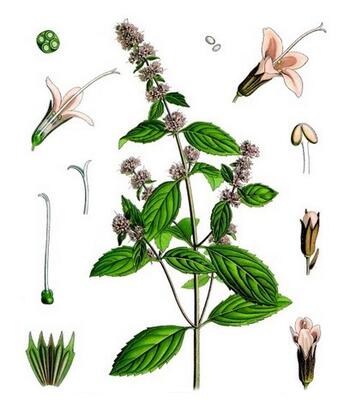
Family Lamiaceae. A perennial herbaceous plant up to 50–100 cm high. It propagates vegetatively using a horizontal rhizome, from which fibrous roots extend. The stem is hollow, branched, tetrahedral. The leaves are elongated-ovate, sharply serrated, short-petiolate. Small, light, pinkish-purple flowers form spike-shaped inflorescences at the tops of the stems. Blooms in June-September. The whole plant has a strong, pleasant, well-known “mint” smell.
Peppermint does not occur in the wild. As a cultivated plant, it is widely cultivated in the middle and southern regions of Russia.
The refreshing aroma of mint is due to essential oil, the main component of which is menthol. Essential oil content in leaves is up to 2.75%, in inflorescences – up to 6%, in stems – up to 0.3%. Carotene (up to 40 mg%), acids (ursolic and oleanic), triterpene compounds, hesperidin, flavonoids and betaine were also isolated from the plant.
Mint is one of the universal medicinal plants. It has antispasmodic, analgesic, antiseptic, choleretic, carminative and some laxative effects. Mint is used as a cardiac stimulant and headache soothing remedy for hypertension, angina pectoris and atherosclerosis. Recommended for colds of the upper respiratory tract, bronchial asthma and bronchiectasis.
Mint works well for dyskinetic pain in the stomach and intestines, improves digestion and increases appetite. It is used for gastritis, peptic ulcers, colitis and enterocolitis, for flatulence, nausea, vomiting, diarrhea (despite the laxative effect). It is added to herbal teas for cholelithiasis, hepatitis, and cholecystitis.
Mint , along with potato juice and St. John's wort, is considered the best remedy for heartburn caused by increased acidity of gastric juice.
Mint, when taken orally regularly, has a general strengthening and wound-healing effect, helps with hysteria, insomnia, migraines, and has a diuretic effect. Mint leaves improve the taste and smell of medicinal infusions, so it is advisable to add it to all preparations.
Externally, mint is used for baths and for dental diseases. Peppermint oil is used for inhalation; it is included in drops, mixtures, tablets and pencils.