

Raponticum rhizomes
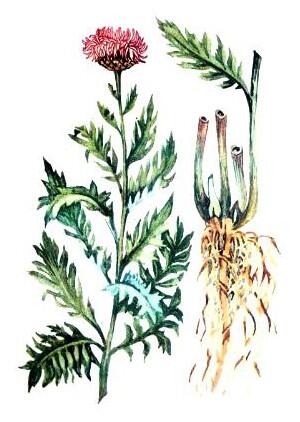
Raponticum is a herbaceous perennial plant of the Compositae family, with an erect, hollow stem, up to 2 m high. In the upper part it is slightly pubescent. The rhizome is woody, thick, with numerous thin fibrous roots. The leaves are large, alternate, serrated along the edge. The top of the stem is crowned by a spherical single basket.
The flowers of Raponticum are tubular, violet-purple. The fruits are tetrahedral ribbed achenes 5-8 mm long. The plant blooms in July-August, the seeds ripen from August to September. Raponticum reproduces by rhizomes and seeds. The plant is endemic and has a limited distribution area. It grows in Altai, in the Sayan Mountains and isolated in the mountains of Kazakhstan. Listed in the Red Book.
This medicinal plant gained wide fame and popularity in the middle of the last century. Since then, constant research has been carried out on the beneficial properties of this natural medicine. It has been established that raponticum is an effective prophylactic agent that can prevent the development of many diseases and pathologies. Some experts note its beneficial effect on restoring and maintaining the immune system, the ability to tone the body and give a person energy and vigor.
The plant contains a significant amount of useful substances and elements. It contains: essential oils, alkaloids, tannins, resins, various groups of vitamins, organic acids, carotene and other useful compounds. Among other things, it is worth noting the presence in its composition of such ecdysteroids and biostimulants as ecdysone, ecdysterone, inocosterone.
This medicinal herb is quite actively used in medicine. It is often recommended for functional disorders of the central nervous system, impotence, severe physical and mental fatigue. The positive effect of herbal preparations based on raponticum is also observed with excessive irritability, headaches, decreased appetite, increased fatigue, and decreased sexual activity. They are used to reduce the impact of adverse environmental factors on humans.
The plant is often used to quickly restore the body after a serious illness, eliminate disorders caused by metabolic disorders, to maintain the general tone of the body, relieve irritability and neuroses. Some substances contained in this medicinal plant are used in advanced fields of medicine. Previously, people used preparations from it as an effective remedy for fractures, food poisoning, and to normalize low blood pressure.
This perennial herbaceous plant reaches a height of two meters. Its roots and rhizomes have a specific smell and a huge range of beneficial properties. They are the ones most often used for medical purposes.
Biologically active substances contained in the roots of raponticum are included in various medications. Experiments on animals have shown that infusions and liquid extracts of this medicinal plant have the ability to excite the central nervous system. This type of herb can provide effective help for various neuroses and depressive conditions.