

Sage leaves
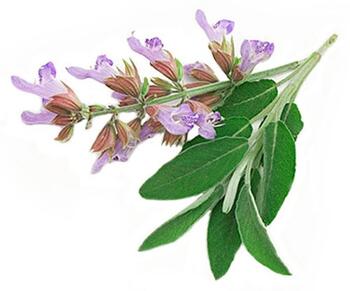
A herbaceous essential oil plant with anti-inflammatory and antimicrobial properties.
Sage preparations are used for inflammatory diseases of the oropharynx, nasopharynx and upper respiratory tract, oral mucosa, loss of voice, pharyngitis, bronchial asthma, cough, sore throat, stomatitis, gingivitis, laryngeal papillomatosis.
Sage is used for gastritis and peptic ulcers of the stomach and duodenum with reduced secretory activity of the gastrointestinal tract and acidity of gastric juice, for diseases of the liver and gall bladder, and diarrhea. For endocervicitis, colpitis and leucorrhoea, the plant is used topically for douching. Sage infusions are used to treat festering ulcers and wounds, for minor burns and frostbite, for the treatment of true, microbial, seborrheic, occupational eczema, eczematous erythroderma. Sage leaves are included in many preparations.
Salvia officinalis belongs to the Lamiaceae family.
Salvia officinalis is a subshrub, perennial herbaceous medicinal plant 20-70 cm high, with an erect, branched whitish fluffy stem; at the base of the stem there are opposite petiolate, woody, oval-ovate, grey-tomentose, wrinkled, fluffy, finely toothed, grayish-green leaves tapering towards the base. The flowers are blue-violet, less often light pink or white, two-lipped, arranged in rings in the upper spike-shaped inflorescences. The plant blooms in May-June. The fruits are four ovoid-triangular nuts, ripen in July-August.
The homeland of the plant is Asia Minor. In the wild, sage is common in the Mediterranean countries and the Balkan Peninsula. Cultivated in the North Caucasus, Crimea, the south of the European part of Russia, the Krasnodar Territory, Moldova, and Ukraine. It is grown on plantations of medicinal and essential oil plants and in gardens.
Salvia officinalis leaves contain up to 2.5% essential oil, the components of which are cineole (up to 15%), linalool, α- and β-pinene, borneol and its acetate, thujone, linalyl acetate and other terpene compounds.
The leaves also contain tannins, vitamins P and PP; flavonoids: hispidulin, genquanine, 6-methoxygenquinine, salvitin, luteolin, 6-hydroxyluteolin, cirziliol, cinaroside, nepetin; alkaloids, resinous substances; triterpenoids: ursolic and oleanolic acids; salvin diterpene; phenolcarboxylic acids: chlorogenic, noochlorogenic, cryptochlorogenic, caffeic, rosemary; bitterness, phytoncides.
The main beneficial properties of sage are anti-inflammatory, antimicrobial and astringent. They are due to the content of tannins and flavonoids in the leaves, as well as the presence of essential oil and vitamins P and PP. The antimicrobial activity of the plant is most pronounced in relation to gram-positive strains of bacteria; to a lesser extent, sage preparations affect gram-negative strains of microorganisms.
The anti-inflammatory effect of sage is due to a decrease in the permeability of the walls of blood vessels and capillaries under the influence of drugs, as well as the presence of hemostatic properties in the plant. The combination of these properties influences the inflammatory process, including the possibility of inhibiting the activity of pathogenic microflora.
When used internally, sage has a strengthening effect on the central nervous system and normalizes the activity of the sex glands. Plant preparations have a slight antispasmodic, hepatoprotective, antilithogenic, antiulcer effect, and can inhibit sweating. The hypoglycemic effect of a decoction and aqueous extract of sage leaves has been revealed, and therefore their use in mild forms of diabetes mellitus is recommended. The bitterness of the leaves increases the secretory activity of the gastrointestinal tract. Sage can suppress lactation in nursing mothers; this property needs further study.
Sage leaves in the form of an infusion are used externally for rinsing, inhalation, lotions and wet turundas. In combination with medications, physioreflexotherapy and therapeutic exercises, the plant is used for joint diseases of various etiologies. Sage is also used in homeopathy.