

 Download

Pharmaceutical Enterprise

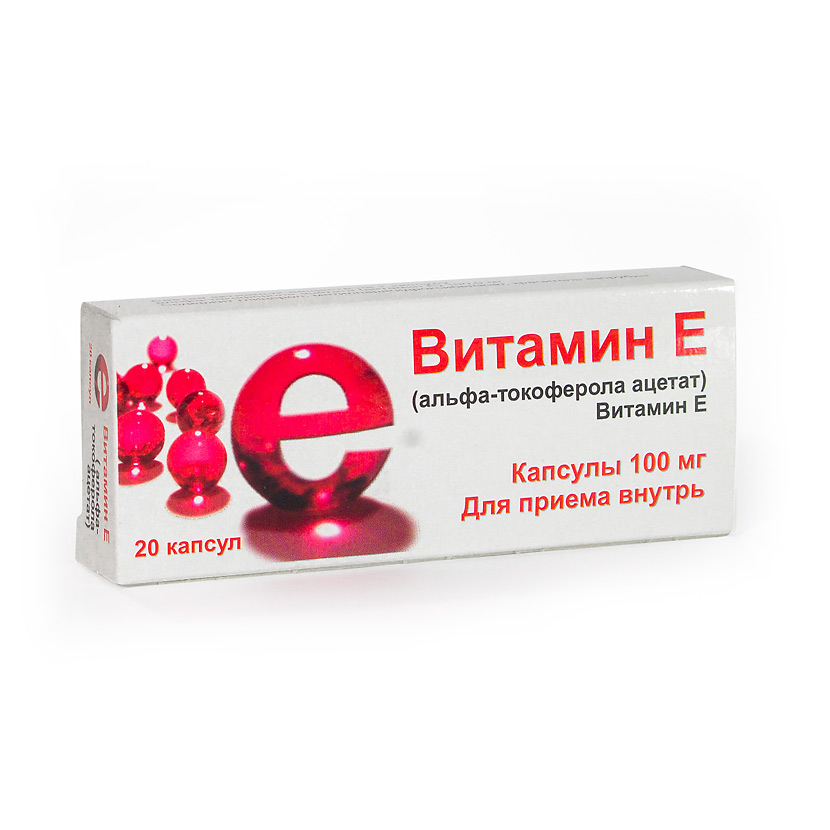
Vitamin E
(alpha tocopherol acetate)
(alpha tocopherol acetate)

Instruction
Sertificates


Attention
Contraindications
Increased individual sensitivity to the components of the drug, acute myocardial infarction, childhood.
Vitamin E
(alpha tocopherol acetate)


It has antioxidant activity, tissue respiration, and other important processes of tissue metabolism; protects tissues from the damaging effects of excess amounts of free radicals and peroxide products; stimulates the synthesis of proteins and collagen.
Registration number: ЛП-003316 от 20.11.2015
Trade name of the drug: Vitamin E (alpha-tocopherol acetate)
Group name: Vitamin E
Dosage form: capsules
Compound:
Active ingredient: alpha-tocopherol acetate (vitamin E) 100.00 mg.
Excipients: sunflower oil 100.0 mg.
Capsule shell: gelatin 44.73 mg, glycerol 14.67 mg, methyl parahydroxybenzoate 0.29 mg, azorubine dye 0.31 mg
Description
The spherical capsules are red in color, filled with an oily liquid from light yellow to dark yellow, without a rancid odor.
Pharmacotherapeutic group
vitamin
Code ATH: A11NA03
Pharmacological properties
Pharmacodynamics
Has antioxidant activity, participates in the biosynthesis of heme and proteins, cell proliferation, tissue respiration, and other important processes of tissue metabolism; protects tissues from the damaging effects of excess amounts of free radicals and peroxide products; stimulates the synthesis of proteins and collagen.
Pharmacokinetics
Absorption from the duodenum (the presence of bile salts, fats, normal functioning of the pancreas is required) - 20-40%. As the dose increases, the degree of absorption decreases. The time to reach maximum concentration is 4 hours. Deposited in all organs and tissues, especially in adipose tissue. Penetrates through the placenta and into breast milk. Excretion is mainly through the gastrointestinal tract, with bile - more than 90%, less than 6% is excreted by the kidneys in the form of glucuronides and other metabolites.
Indications for use
Treatment and prevention of vitamin E hypovitaminosis.
Contraindications:
Increased individual sensitivity to the components of the drug, acute myocardial infarction, childhood.
Use with caution
in patients with severe cardiosclerosis who have had myocardial infarction, with an increased risk of thromboembolism; hypoprothrombinemia caused by vitamin K deficiency.
Use during pregnancy and breastfeeding
During pregnancy and breastfeeding, take the drug only on the recommendation of a doctor.
Directions for use and doses
The drug is intended for use by adult patients only.
2 - 4 capsules per day, for 1 - 2 weeks.
Side effect
Allergic reactions (itching, skin hyperemia); from the gastrointestinal tract: diarrhea, nausea, gastralgia, dyspepsia.
Overdose
When taking vitamin E for a long period in doses of 400-800 IU/day: blurred vision, dizziness, headache, nausea, fatigue, diarrhea, gastralgia, asthenia.
When taking more than 800 IU/day for a long period, there is an increased risk of bleeding in patients with vitamin K hypovitaminosis, impaired metabolism of thyroid hormones, disorders of sexual function, thrombophlebitis, thromboembolism, necrotizing colitis, sepsis, renal failure, hemorrhage in the retina of the eye, hemorrhagic stroke, ascites.
Treatment: symptomatic; drug withdrawal; prescription of glucocorticosteroids that accelerate the metabolism of vitamin E in the liver.
Interaction with other drugs
Simultaneous intake of large doses of vitamin E with vitamin K or with indirect anticoagulants (coumarin and indanedione derivatives) increases blood clotting time. Vitamin E enhances the effect of glucocorticosteroids, non-steroidal anti-inflammatory drugs, cardiac glycosides. If taken simultaneously with other vitamin and mineral preparations containing fat-soluble vitamins A, D and E, you should consult your doctor.
Impact on the ability to drive vehicles and operate machinery
Taking the drug does not affect a person’s ability to drive vehicles or operate machinery.
special instructions
Do not exceed the recommended dosage. You should not take a double dose if you missed a previous dose of the drug.
Release form
- Capsules 100 mg.
- 10 capsules in a blister pack.
- 1, 2, 3, 4, 6 or 10 blister packs along with instructions for use are placed in a cardboard pack.
For hospitals:
- 50, 100, 200, 400, 600 blister packs, along with an equal number of instructions for use, are placed in a hermetically sealed bag made of light-proof polyethylene film. It is allowed to put instructions for use on the package. Polyethylene packages and packs are placed in a cardboard box.
- 50, 100, 200, 400, 600, 1000, 2000, 4000, 6000 contour cell packaging along with an equal number of instructions for use are placed in a cardboard box.
Storage conditions
In a dry place, protected from light, at a temperature not exceeding 25 ° C.
Keep out of the reach of children.
Best before date
3 years. Do not use after the expiration date.
Conditions for dispensing from pharmacies
Over the counter.


